
EPA compliance for mobile diesel mechanics — what fleets need to know
EPA enforcement on aftertreatment tampering doesn't just hit fleets and owner-operators — it hits the mechanics who do the work. Here's what compliance looks like in 2026.
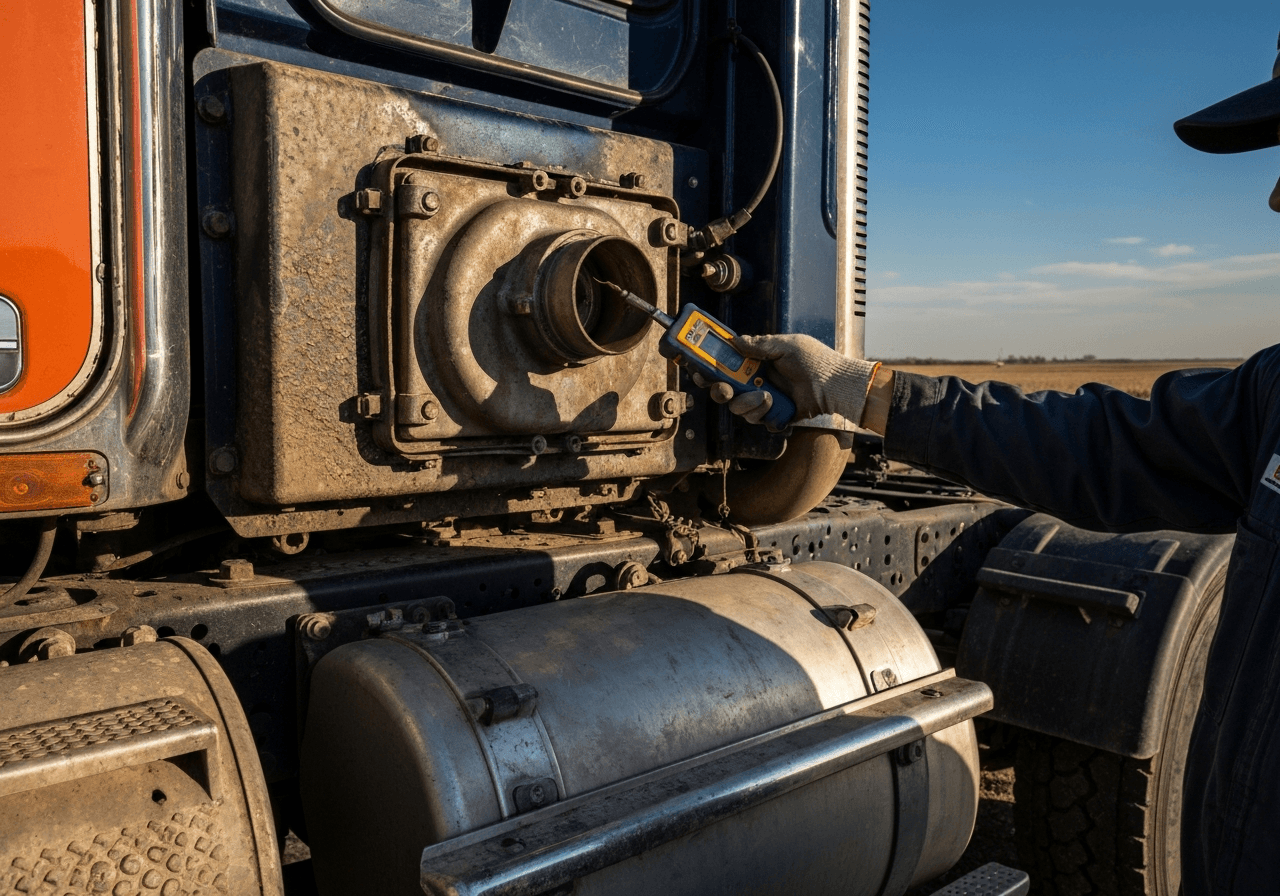
EPA enforcement of aftertreatment tampering — DEF deletes, DPF removals, EGR bypasses — has escalated significantly since 2020 and continues climbing in 2026. The legal framework (Clean Air Act § 7522) covers everyone in the chain: the truck owner, the installer, and even the shop that sells the tuning hardware. Fleets that contract mobile mechanics need to verify their vendors' compliance before something goes wrong, not after. Here's what compliance actually looks like, what disqualifies a vendor, and what to require in writing.
What the law actually covers
The Clean Air Act prohibits three categories of activity related to mobile-source emissions:
- Tampering with emissions controls (removing or rendering inoperative): DPF removal, SCR catalyst removal, DEF system bypass, EGR removal or blocking, NOx sensor disabling
- Manufacturing, selling, or installing "defeat devices" — physical hardware or software intended to bypass emissions
- Tampering with ECM calibration to mask or disable emissions monitoring or enforcement
Penalties as of 2026 (adjusted annually): up to $4,819 per truck per day. The per-day calculation matters — a fleet that's been operating tampered trucks for 18 months can face seven-figure exposure for a 10-truck violation.
Who's liable in the chain
EPA enforcement actions have established a clear pattern: liability attaches to every party in the chain who knew or should have known the work was non-compliant. This means:
- Truck owner — direct liability for operating a tampered truck
- Mechanic / installer — direct liability for performing the tampering work
- Shop or business that employed the mechanic — vicarious liability and corporate exposure
- Software / tune vendor — direct liability for selling the bypass tune
- Fleet contracting the work — direct liability for hiring a vendor that did the tampering, including where the fleet "didn't know" but a reasonable diligence would have revealed it
What a compliant mobile mechanic vendor looks like
These are the markers of an actually-compliant vendor — not a vendor who claims compliance:
- Written no-delete policy provided on request, with the language explicit ("we will not remove, disable, or bypass any emissions control device or system")
- Repair invoices and documentation specifically note that work performed restored or maintained factory aftertreatment configuration
- Pre and post-work OBD scans documented for every aftertreatment-adjacent repair — readiness monitors verified
- Refusal to quote or perform any work described as a "delete," "tune," "DEF defeat," "DPF bypass," or similar — and willingness to put that refusal in writing
- Familiarity with EPA enforcement history and able to articulate why compliance matters at the technician level, not just at the policy level
What disqualifies a vendor
- Will quote or perform delete work for any price
- Has a price list that includes "delete tune installation" or "DPF removal" as a service category
- Service truck branding or social media presence references delete services or "performance tuning" of stock aftertreatment
- Refuses to provide written confirmation of no-delete policy
- Has been named in EPA enforcement actions (these are public — searchable in the EPA enforcement and compliance database)
Vendor compliance verification — what to require in writing
Most fleet vendor onboarding processes already require insurance, W-9, and credentials. The EPA-compliance verification adds three documents:
- Written no-delete policy on vendor letterhead, signed by an officer of the business
- Statement that no employee of the vendor has been the subject of EPA enforcement action related to aftertreatment tampering
- Acknowledgment that any future request from the fleet for delete-related work will be refused and reported through the fleet's internal compliance channel
What we do specifically
Moku Mobile Mechanics has a written no-delete policy. We diagnose and repair aftertreatment systems to factory configuration. We document pre and post-work OBD scans for aftertreatment-adjacent repairs. We restore deleted systems to factory configuration for customers who want to come back into compliance (a service category that has grown noticeably since 2023). We will not quote, install, or assist with any delete, defeat, or bypass of emissions controls regardless of price offered.
Why compliance is also good business
Beyond avoiding fines, compliant operation has business advantages that show up over time:
- Truck resale value preserved — deleted trucks lose $15,000-$30,000 at resale; the buyer pool is shrinking
- Engine warranty preserved — most manufacturers void aftertreatment warranties on tampered trucks
- Insurance — commercial insurers increasingly surcharge or deny coverage on tampered trucks
- Fleet vendor approval — major contracted-freight networks (Amazon, large 3PLs) increasingly require compliance attestation
- Driver hiring — drivers prefer fleets without EPA exposure that could ground trucks mid-route
Frequently asked
What are the EPA fines for emissions tampering on commercial trucks?+
Up to $4,819 per truck per day of violation as of 2026 (adjusted annually for inflation). Per-day enforcement means even short periods of operation on tampered trucks can result in seven-figure exposure for fleets.
Is the fleet liable if a vendor deleted the trucks?+
Yes — EPA enforcement has consistently treated fleets as liable for tampered trucks they operated, regardless of who performed the tampering. "I didn't know" is rarely a defense when basic vendor diligence would have revealed the issue.
How do I verify a mobile mechanic vendor is EPA-compliant?+
Request a written no-delete policy on vendor letterhead, verify the vendor name against the EPA enforcement and compliance database (publicly searchable), and confirm pre/post-work OBD scan documentation as a standard practice.
Can a tampered truck be restored to compliance?+
Yes. Restoration involves physical reinstallation of any removed aftertreatment components, ECM calibration restoration, and verification of OBD readiness. Typical cost $5,500-$9,500. We perform this service.
Why do some shops still offer delete tunes if it's illegal?+
Enforcement is significant but not universal — shops bet on not being caught. EPA enforcement actions have accelerated since 2020 and continue increasing. The math is increasingly unfavorable for the shop and the customer.
Related
Truck down? We dispatch 24/7.
100-mile radius from Lincoln, NE.