
DEF Full but Still in a 5 MPH Derate? SCR Conversion Fault on a DD15 at I-80 Exit 401
A 2020 Cascadia DD15 dropped into a 5 MPH derate at the TA on I-80 Exit 401 with a full DEF tank. The problem wasn't fluid — it was a clogged doser and a lazy inlet NOx sensor. Here's how we got the driver rolling the same evening.
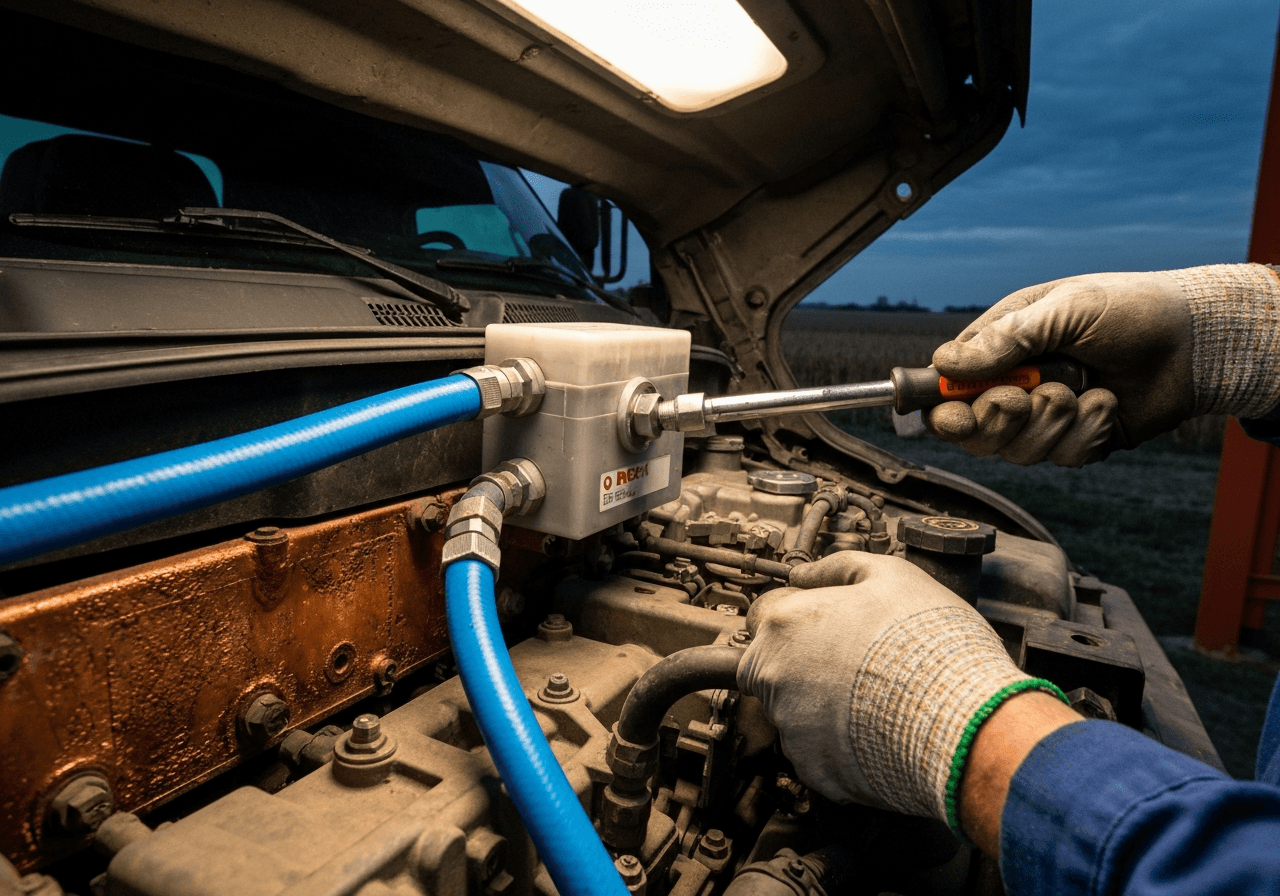
If your DEF tank is full but you're still stuck in a 5 MPH derate with an SCR light, the problem is almost never the fluid — it's the system that injects and measures it. On a 2020 Freightliner Cascadia with a Detroit DD15 at the TA Travel Center on I-80 Exit 401 in Lincoln, the ECM logged SPN 4364 FMI 18 (SCR conversion efficiency low) and SPN 3361 FMI 5 (DEF doser circuit). The DEF was full. The real cause was a clogged doser tip and a lazy inlet NOx sensor, which starved the SCR of the injection it needed and dropped conversion efficiency below the EPA threshold. We cleaned and replaced the doser, swapped the NOx sensor, forced a stationary regen, cleared the codes, and the driver was rolling the same evening — no tow.
Why does a 5 MPH derate happen when the DEF tank is full?
A full DEF tank only tells you that you have fluid available. The derate is triggered by what the ECM measures downstream — specifically, how well the SCR catalyst is converting NOx. If the doser isn't spraying the right amount of DEF into the exhaust, or the NOx sensors are reading incorrectly, the ECM sees low conversion efficiency and assumes the emissions system has failed. After a warning period, it steps the truck down to a 5 MPH limp mode to force a repair. In this case the doser tip was clogged, so barely any DEF was reaching the catalyst regardless of how full the tank was.
What do SPN 4364 and SPN 3361 mean together?
These two codes told the whole story on this truck. SPN 4364 FMI 18 means SCR conversion efficiency is below the acceptable threshold — the aftertreatment isn't cleaning NOx well enough. SPN 3361 FMI 5 points at the DEF doser (dosing valve) circuit. When you see them together, it usually means the system isn't dosing properly, and the downstream sensor is confirming the exhaust is still dirty.
| Fault code | What it means | What we found |
|---|---|---|
| SPN 4364 FMI 18 | SCR conversion efficiency low | Downstream NOx still high — SCR not cleaning exhaust |
| SPN 3361 FMI 5 | DEF doser circuit fault | Clogged doser tip, little DEF reaching the catalyst |
| Root cause | — | Clogged doser + lazy inlet NOx sensor, not a fluid issue |
How did we diagnose it at the TA on I-80?
We staged out to Exit 401 and were on the truck fast. Rather than assume the codes and start throwing parts at it, we verified the doser wasn't injecting and checked the NOx sensor readings against live data. The inlet NOx sensor was reading lazy — slow and inconsistent — which skews the ECM's whole conversion calculation. That combination confirmed it was a hardware and dosing problem, not a DEF quality or level problem.
What did the repair involve?
- Cleaned and replaced the DEF doser tip so it injects a proper spray pattern
- Tested and replaced the lazy inlet NOx sensor
- Forced a stationary regen to burn off and reset the aftertreatment
- Cleared the stored fault codes
- Ran the reset procedure to exit the 5 MPH limp mode and restore full power
Total time on scene was about two hours. The parts were a DEF doser tip and an inlet NOx sensor — both common wear items on high-mileage DD15 aftertreatment systems. The derate cleared, full power came back, and the driver pulled out of the TA the same evening. No tow, no overnight shutdown, no waiting for a shop appointment.
Could the driver have avoided this derate?
Doser clogging and NOx sensor drift are gradual failures. The warning signs usually show up as intermittent SCR or check-engine lights before the full 5 MPH derate hits. If a truck flashes those lights and clears them a few times, that's the window to get the aftertreatment scanned — catching a lazy sensor or a partially clogged doser early is far cheaper than a roadside limp-mode recovery. For fleets running the I-80 and I-29 corridors, folding a quick aftertreatment health check into PM cycles prevents most of these unplanned derates.
How fast can Moku get to a derate on I-80 near Lincoln?
The TA Travel Center at Exit 401 is our primary I-80 staging point through Lincoln, so in-city calls like this one are typically under 30 minutes. We carry doser components, NOx sensors, and the diagnostic tools to force regens and run limp-mode resets on the spot — which is why this truck left the same evening instead of getting towed to a shop and waiting days for a bay.
Frequently asked
Why am I in a 5 MPH derate if my DEF tank is full?+
A full tank only means you have fluid. The derate is caused by low SCR conversion efficiency, which happens when the doser isn't injecting properly or the NOx sensors read wrong. On this DD15, a clogged doser tip meant almost no DEF was reaching the catalyst even with a full tank.
What causes SPN 4364 FMI 18 on a Detroit DD15?+
SPN 4364 FMI 18 means SCR conversion efficiency dropped below the EPA threshold. Common causes are a clogged or failing DEF doser, faulty NOx sensors, poor DEF quality, or a degraded SCR catalyst. On this truck it was a clogged doser combined with a lazy inlet NOx sensor.
Can a bad NOx sensor cause a DEF derate?+
Yes. The ECM uses inlet and outlet NOx sensors to calculate how well the SCR is cleaning the exhaust. A lazy or failed sensor feeds bad data into that calculation, so the ECM can register low conversion efficiency and trigger a derate even if the rest of the system is working.
Do I need a tow if my truck is in a 5 MPH derate?+
Usually not. A mobile diesel mechanic can diagnose the doser and sensors on site, force a regen, clear the codes, and run the reset to exit limp mode. This DD15 was fixed at the TA on I-80 Exit 401 and driving the same evening with no tow.
How long does it take to clear a DEF derate roadside?+
When the cause is a doser and NOx sensor, expect roughly two hours on scene, including diagnosis, parts replacement, a forced stationary regen, and the limp-mode reset. That's what this job took at the Lincoln TA.
How fast can Moku reach a breakdown on I-80 near Lincoln?+
The TA Travel Center at Exit 401 is our primary I-80 staging point through Lincoln, so we're usually on scene in under 30 minutes within the city. Call (402) 798-4847 and we'll dispatch with the parts and tools to clear the derate on the spot.
Related
Truck down? We dispatch 24/7.
100-mile radius from Lincoln, NE.