
DEF Light Stayed On After a Refill? Why a Bad Jug Dropped This Kenworth to 5 MPH on I-80
A driver topped off DEF at the truck stop but the amber light stayed on and the Cummins X15 dropped to 5 MPH climbing the I-80 grade west of Grand Island. It wasn't a level problem — it was a DEF quality fault a refill can't clear.
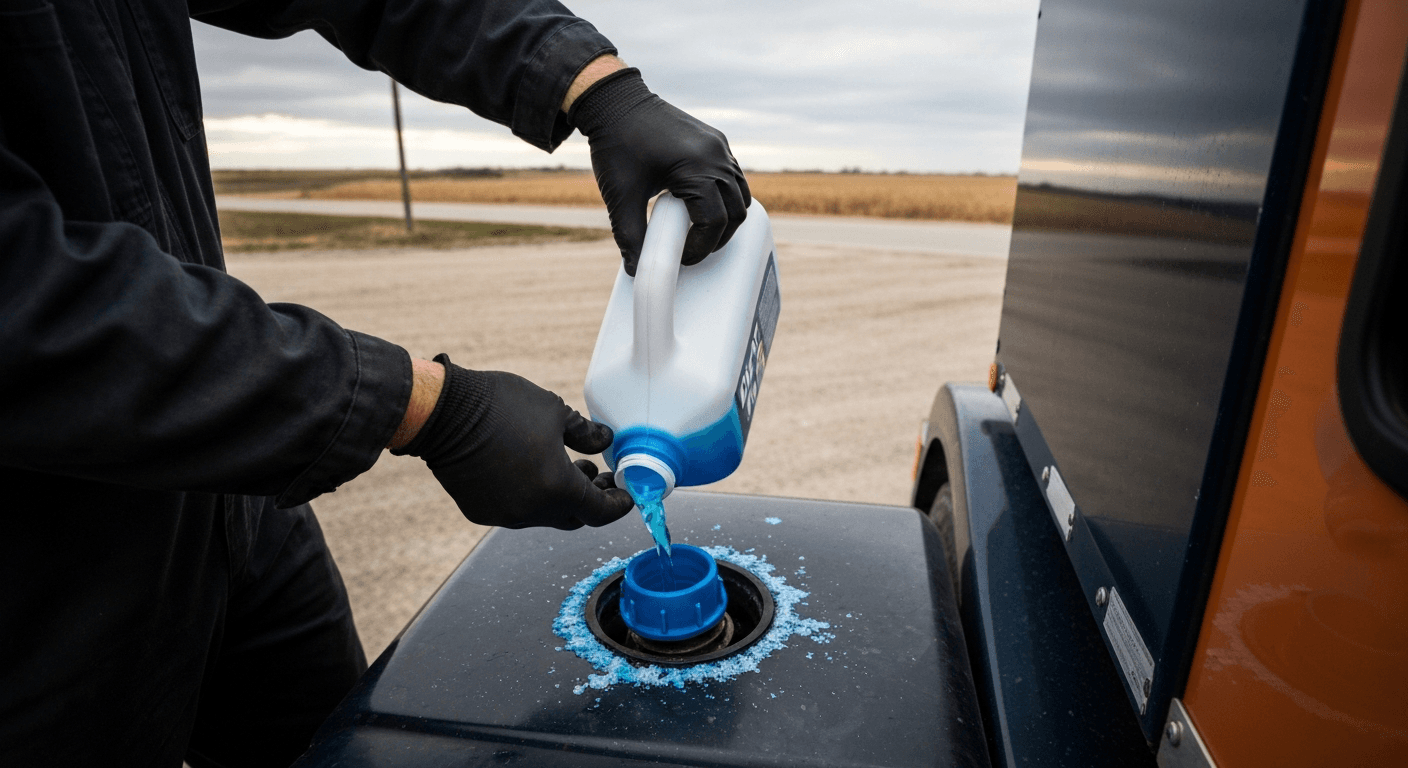
If you refilled your DEF tank but the amber DEF light stayed on and the truck still derated, the problem is almost certainly DEF quality — not level. Adding more fluid to a tank contaminated by a bad or old jug of DEF won't clear an SPN 3364 (DEF quality low) fault. The ECM has already flagged the SCR system as inefficient, so it needs the contaminated fluid drained and flushed, verified ISO 22241 DEF added, the quality fault cleared with a scan tool, and usually a forced regen before it will exit limp mode. That's exactly what this 2021 Kenworth T680 needed west of Grand Island.
What happened to this Kenworth near Grand Island?
The driver of a 2021 Kenworth T680 with a Cummins X15 stopped at a truck stop, topped off the DEF tank, and got back on I-80 heading west. The amber DEF light never went out. Climbing the grade west of Grand Island the truck dropped into a 25% power reduction. When the driver restarted at the fuel island, it escalated straight to a 5 MPH limp mode — stranded.
We pulled two codes with the scan tool: SPN 3364 FMI 18 (DEF quality low) and SPN 1761 FMI 1 (DEF tank level). The level code was misleading. The real issue was the quality sensor reading out of range because the fresh fill had been diluted by a bad jug already in the tank. SCR efficiency had dropped below the EPA threshold, and no amount of good DEF poured on top of contaminated fluid was going to reset it.
Why doesn't a DEF refill clear the derate?
Drivers assume the DEF light means "add fluid." Sometimes it does. But the X15's aftertreatment monitors DEF quality and SCR efficiency continuously through NOx sensors and the DEF quality sensor. When it detects fluid that's off-spec — diluted, expired, or contaminated — it logs a quality fault and begins a derate countdown that a refill alone cannot undo.
- A level fault clears when the tank is filled with good DEF — a refill fixes it.
- A quality fault (SPN 3364) stays active because the contaminated fluid is still in the tank and lines, and the ECM has already latched the fault.
- Once the truck hits 5 MPH limp mode, it needs a scan tool to clear the fault and a reset procedure to exit — you cannot drive it off.
How we cleared the 5 MPH limp mode roadside
We worked through the aftertreatment system in order rather than guessing. The full job took 95 minutes on scene at the fuel island:
- Drained and flushed the contaminated DEF out of the tank.
- Refilled with 5 gallons of verified ISO 22241 DEF and replaced the DEF filter.
- Cleared the SCR DEF quality fault with the scan tool.
- Forced a stationary regen to bring the aftertreatment back into range.
- Verified the NOx sensors and DEF dosing were reading correctly.
- Ran the reset procedure to exit 5 MPH limp mode and confirmed full power.
The derate cleared, full power was restored, and the driver was back on I-80 the same afternoon — no tow, no shop appointment, no lost day.
| Fault | What it means | Does a refill fix it? |
|---|---|---|
| SPN 1761 FMI 1 | DEF tank level low | Yes — add good DEF |
| SPN 3364 FMI 18 | DEF quality low / out of range | No — needs flush, good DEF, and scan-tool clear |
| SCR efficiency below threshold | Aftertreatment not reducing NOx | No — needs regen + reset procedure |
Why is the I-80 corridor west of Grand Island a hotspot for this?
Grand Island and the I-80 west grades are a common spot where DEF quality derates surface. Drivers top off at a fuel island, hit the climb, and the added load pushes the aftertreatment to demand more DEF dosing — which is when a marginal or contaminated fill fails the quality check. We see this pattern regularly along the I-80 corridor between Lincoln, Omaha, and the central Nebraska stretch, and we stock verified DEF specifically for it.
Can you prevent a DEF quality derate?
- Only buy ISO 22241-compliant DEF from high-turnover sources — avoid jugs that have been sitting in a hot shed for months.
- Check the manufacture/expiration date before pouring.
- Never mix DEF with water or top off from an unknown container.
- If your DEF light comes on and doesn't clear within a short drive after a good refill, stop and get it diagnosed before it escalates to 5 MPH.
- Don't ignore an amber DEF light — the derate stages get worse the longer you drive on it.
Frequently asked
I refilled my DEF but the light won't go off — what's wrong?+
If the light stays on after a proper refill, you likely have a DEF quality fault (SPN 3364), not a level fault. Contaminated, diluted, or expired DEF already in the tank keeps the fault active. It needs the bad fluid flushed, verified DEF added, and the code cleared with a scan tool.
Can I drive on a 5 MPH DEF derate to the next exit?+
Not effectively — 5 MPH limp mode is designed to get you off the road, not to keep moving. You can't clear it by driving, and forcing it can leave you stranded in traffic. Call for mobile service to clear it where you are; on I-80 near Grand Island we reach most trucks the same day at (402) 798-4847.
How much DEF does it take to fix a quality fault?+
The amount of fluid isn't the issue — it's the contamination. We drain and flush the tank, then refill with verified ISO 22241 DEF. On this Kenworth it took about 5 gallons plus a new DEF filter, but the critical step is clearing the fault and running a regen so the SCR system passes its efficiency check.
Why did a bad jug of DEF cause this if I only added a little?+
Even a small amount of off-spec DEF can drop the quality sensor reading below threshold, especially when mixed into a partially full tank. The X15's aftertreatment reads the whole tank's chemistry, so one bad jug can flag the entire system as low quality and trigger a derate.
How long does it take to clear a DEF derate roadside?+
For this job it took about 95 minutes on scene — draining and flushing the tank, refilling with verified DEF, clearing the fault, forcing a stationary regen, verifying sensors, and running the reset. Most DEF quality derates fall in the 60–120 minute range depending on regen time.
Will deleting or bypassing the DEF system stop this from happening?+
No — and it's illegal. DEF delete violates EPA regulations, risks major fines, and can't legally pass a DOT inspection. The right fix is using verified DEF and clearing the fault properly, which is what we did here and what keeps the truck compliant and running.
Related
Truck down? We dispatch 24/7.
100-mile radius from Lincoln, NE.