
Catching a Volvo D13 Outlet NOx Sensor Failure Before It Derated (SPN 3216)
A 2021 Volvo VNL threw a stored SCR/NOx fault at a Lincoln PM with no derate yet. We replaced the failing outlet NOx sensor, stopped the inducement countdown, and kept the truck out of a roadside limp-mode situation.
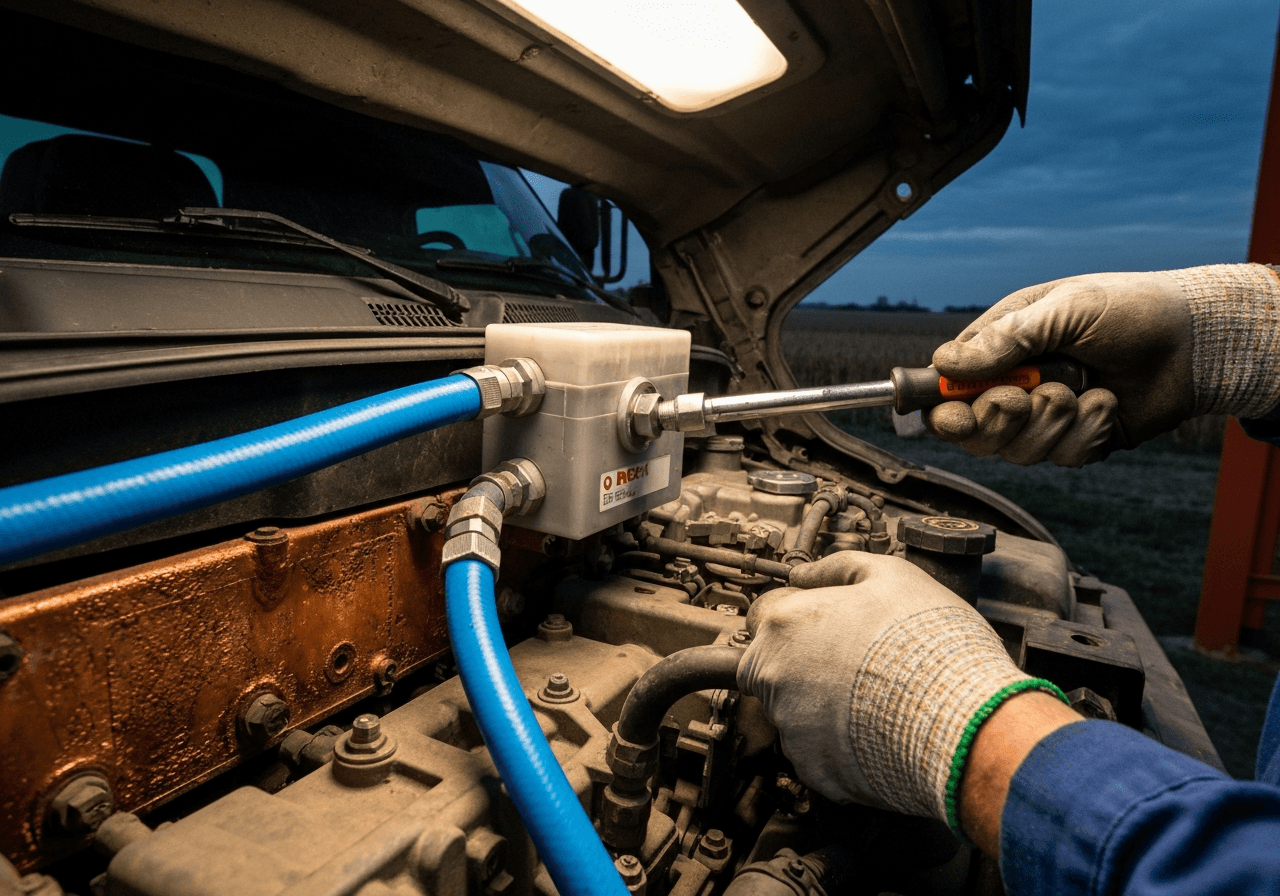
An outlet NOx sensor fault like SPN 3216 FMI 20 on a Volvo D13 means the downstream sensor that verifies SCR conversion is drifting out of range. On its own it's a check-engine light — but paired with SPN 4094 FMI 18 (NOx conversion inducement pending), it's a countdown to a 5 MPH derate. On a 2021 Volvo VNL at a Lincoln yard, we caught exactly this during a scheduled PM, replaced the outlet NOx sensor in 75 minutes, cleared the inducement, and the truck never lost a mile of uptime.
What do SPN 3216 and SPN 4094 mean on a Volvo D13?
These two codes tell a story together. SPN 3216 points at the outlet (downstream) NOx sensor — the one after the SCR catalyst that confirms the aftertreatment is actually knocking NOx out of the exhaust. FMI 20 means the signal is drifting high/out of the expected range. SPN 4094 FMI 18 is the ECM saying, 'I can't confirm proper NOx conversion, so I'm arming an inducement.' That inducement is the staged derate: warning lamps first, then reduced power, then the 5 MPH crawl.
- SPN 3216 FMI 20 — outlet NOx sensor reading out of range (the failing part)
- SPN 4094 FMI 18 — NOx conversion inducement pending (the consequence if ignored)
- Together they mean: fix the sensor now, or accept a derate soon
Why did we catch this before a derate happened?
The fleet books Moku for on-site preventive maintenance in Lincoln for exactly this reason. This truck had a check engine light but no derate — the driver could have run it for days without knowing an inducement countdown was already armed. During the scheduled PM we pulled codes with the scan tool, saw the stored SCR/NOx faults, and read the live outlet NOx sensor data. The sensor was drifting, not dead, which is precisely the window where you want to catch it: before it stranded the truck at a truck stop or on the interstate.
How we fixed the Volvo D13 outlet NOx sensor
Straightforward job when it's caught early. Here's the sequence on scene at the Lincoln yard:
What did the repair actually involve?
- Confirmed SPN 3216 FMI 20 and SPN 4094 FMI 18 stored, verified live outlet NOx data was drifting
- Located and removed the failing outlet NOx sensor from the SCR outlet
- Installed the new outlet NOx sensor and reconnected the harness
- Cleared the codes and the pending inducement, then ran the truck and verified SCR conversion values were back in range with the scan tool
| Job detail | This truck |
|---|---|
| Truck | 2021 Volvo VNL, D13 |
| Location | Lincoln, NE yard (during PM) |
| Codes | SPN 3216 FMI 20, SPN 4094 FMI 18 |
| Part replaced | Outlet NOx sensor |
| Time on scene | 75 minutes |
| Downtime | None — caught before derate |
What would have happened if the fleet ignored it?
The inducement was already pending. Left alone, the ECM would have escalated: dash warnings, then a torque/speed reduction, and eventually the 5 MPH derate. That derate doesn't care where you are — it commonly hits on I-80 mid-run, and then you're paying for an emergency roadside call plus lost load time instead of a clean 75-minute PM add-on. A drifting outlet NOx sensor caught at the yard is a minor line item. The same sensor caught at a 5 MPH crawl outside Grand Island is a bad day.
Why book on-site PM with aftertreatment scanning?
This is the wedge for fleets running Volvo, Cummins, PACCAR, and Detroit iron out of eastern Nebraska. NOx sensors, DEF dosing modules, and SCR faults are the number-one cause of avoidable Class 8 downtime we see. Pulling ECM codes at every PM turns a future roadside derate into a scheduled 75-minute swap in your own yard. We do that on-site in Lincoln and Omaha so trucks stay in the rotation.
If you're managing a fleet and want aftertreatment scanning built into your PM routine — or you've got a truck showing a check engine light you're not sure about — call Moku Mobile Mechanics at (402) 798-4847.
Frequently asked
Can I keep driving with SPN 3216 outlet NOx sensor fault?+
You can drive short term while it's just a check engine light, but if SPN 4094 (inducement pending) is also stored, a derate is coming. The safest move is to replace the sensor before the inducement escalates to reduced power and eventually a 5 MPH derate. Don't wait for the crawl.
How long does it take to replace a Volvo D13 outlet NOx sensor?+
On this Lincoln job it took us about 75 minutes total, including diagnosis, replacing the sensor, clearing the inducement, and verifying SCR conversion with the scan tool. Access varies by truck, but caught early it's a quick job. It gets much longer and more expensive once the truck is already derated on the highway.
What's the difference between the inlet and outlet NOx sensor?+
The inlet NOx sensor reads exhaust before the SCR catalyst, and the outlet sensor reads it after. The ECM compares the two to confirm the aftertreatment is actually reducing NOx. SPN 3216 is the outlet sensor — the one that verifies the system is doing its job, which is why a fault there triggers a conversion inducement.
Will a new NOx sensor clear the derate by itself?+
Replacing the sensor fixes the root cause, but you also need to clear the stored fault and the pending inducement with a scan tool, then verify conversion values are back in range. We do all of that on scene. Just swapping the part without clearing the inducement can leave the countdown armed.
Why should a fleet book on-site PM instead of waiting for a breakdown?+
Because most aftertreatment failures show up as a stored code before they become a derate. Pulling ECM codes at every PM lets us catch a drifting NOx sensor at your yard instead of at a 5 MPH crawl on I-80. That turns an emergency roadside call into a routine scheduled repair with zero unplanned downtime.
Related
Truck down? We dispatch 24/7.
100-mile radius from Lincoln, NE.